
Yachting | Design & Innovation
How an extraordinary sailing yacht puts one of the oldest sources of power to remarkably modern use.
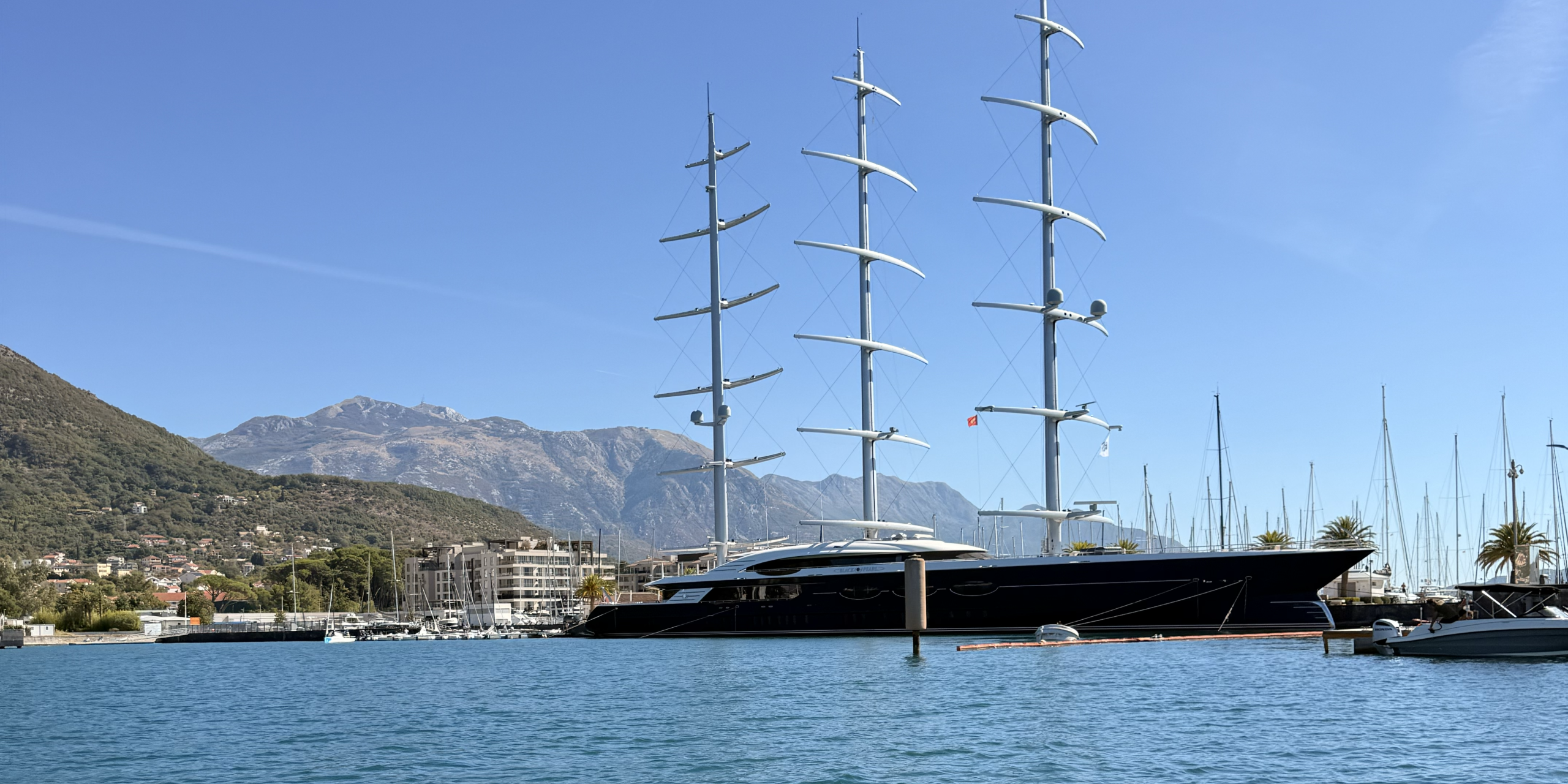
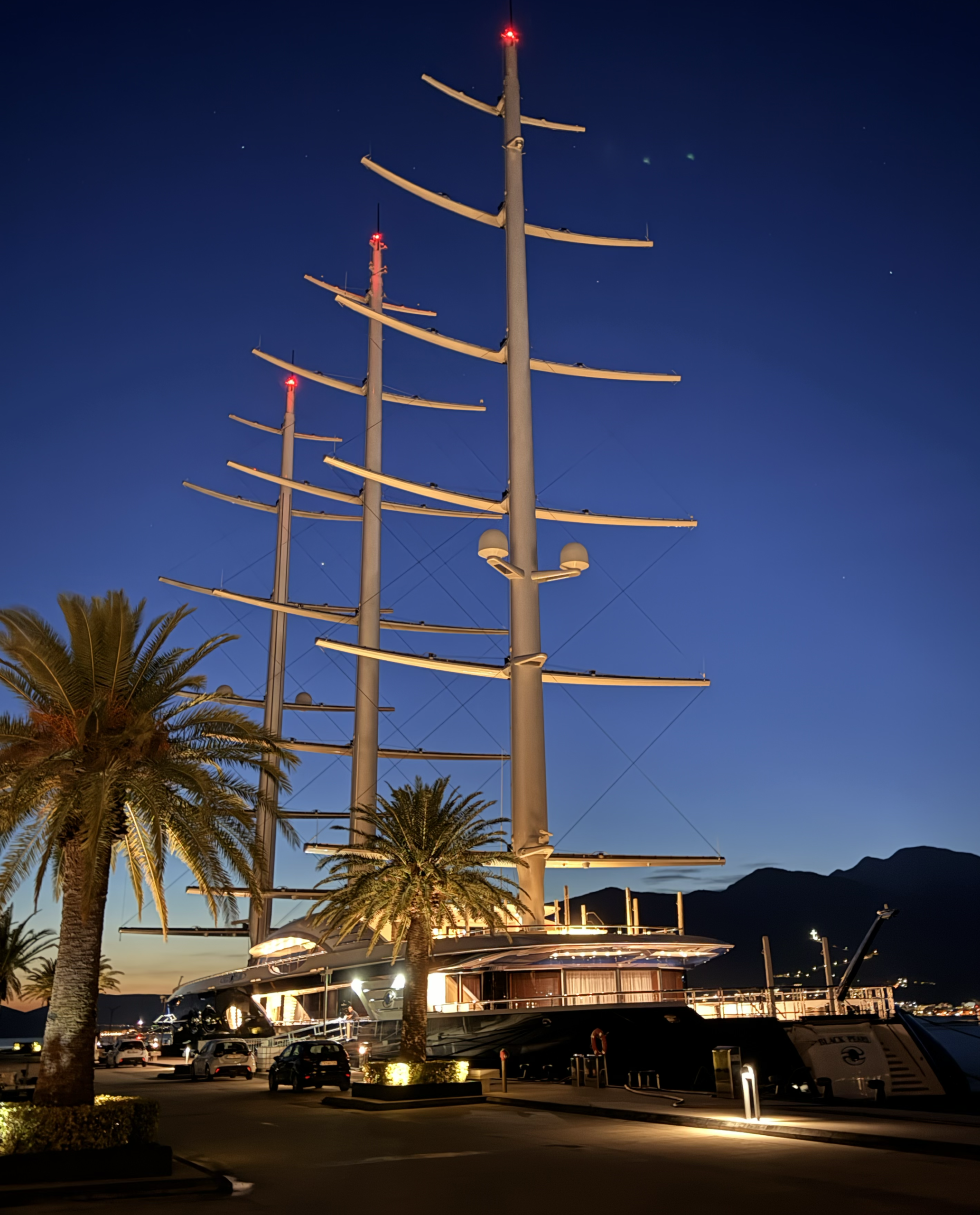
Three towering masts. A sweep of dark sails. A silhouette that commands attention before a single detail comes into focus. Black Pearl makes a formidable first impression. Understanding how she works makes her even more compelling.
Previously featured in our August look at the world’s most remarkable yachts, Black Pearl recently became a closer encounter when our team member, Nisha, had the opportunity to step aboard. The visit offers a reason to return to a vessel whose engineering deserves a story of its own.
At the heart of that story is a question: how do you harness the wind to move a yacht of this scale, while also helping power life aboard?
An Extraordinary Spread of Sail
Black Pearl’s three carbon masts rise approximately 70 meters above the water. Designed by Dykstra Naval Architects, her DynaRig system allows roughly 2,900 square meters of sail to be deployed in about seven minutes through push-button controls.
That striking silhouette has a practical purpose. The rig brings modern control to an ancient means of travel, allowing an immense sailing yacht to make effective use of the wind. Behind the dramatic appearance is an engineering challenge involving the hull, the masts and the forces they must handle together.
Making Energy Along the Way
The ingenuity continues beneath the surface.
Under suitable sailing conditions, Black Pearl can use the movement of water past her propellers to generate electricity. That energy can help supply the yacht’s onboard electrical needs, connecting the act of sailing with the demands of life aboard. Her hybrid propulsion installation and waste-heat recovery systems add further layers to that approach.
It is a particularly interesting idea at this scale: the journey itself becomes an opportunity to recover energy.
What That Means at Sea
The engineering has practical consequences for long-distance travel. In a March 2026 feature, yacht management company IYC reported that Black Pearl completed an Atlantic crossing from Tenerife to Antigua in under ten days, consuming approximately 16,000 liters of fuel. The figure offers a concrete example of how sailing and onboard systems can work together during an ocean passage.
For those aboard, these systems support an experience shaped by the wind, with the comforts and spaces expected of a superyacht. For anyone admiring her from shore, they add another dimension to those unmistakable sails.
Beyond the Silhouette
The Thinking Behind the Sails
Black Pearl’s appeal begins with what you can see. Her lasting fascination lies in the thinking behind it: an ambitious application of modern engineering to the enduring possibility of traveling under sail.