
Yachting | Lore & Legend
Every stretch of open water carries its stories. Some arrive as warnings, others as whispers, passed from one crew to the next long after their origins have disappeared beneath the surface.
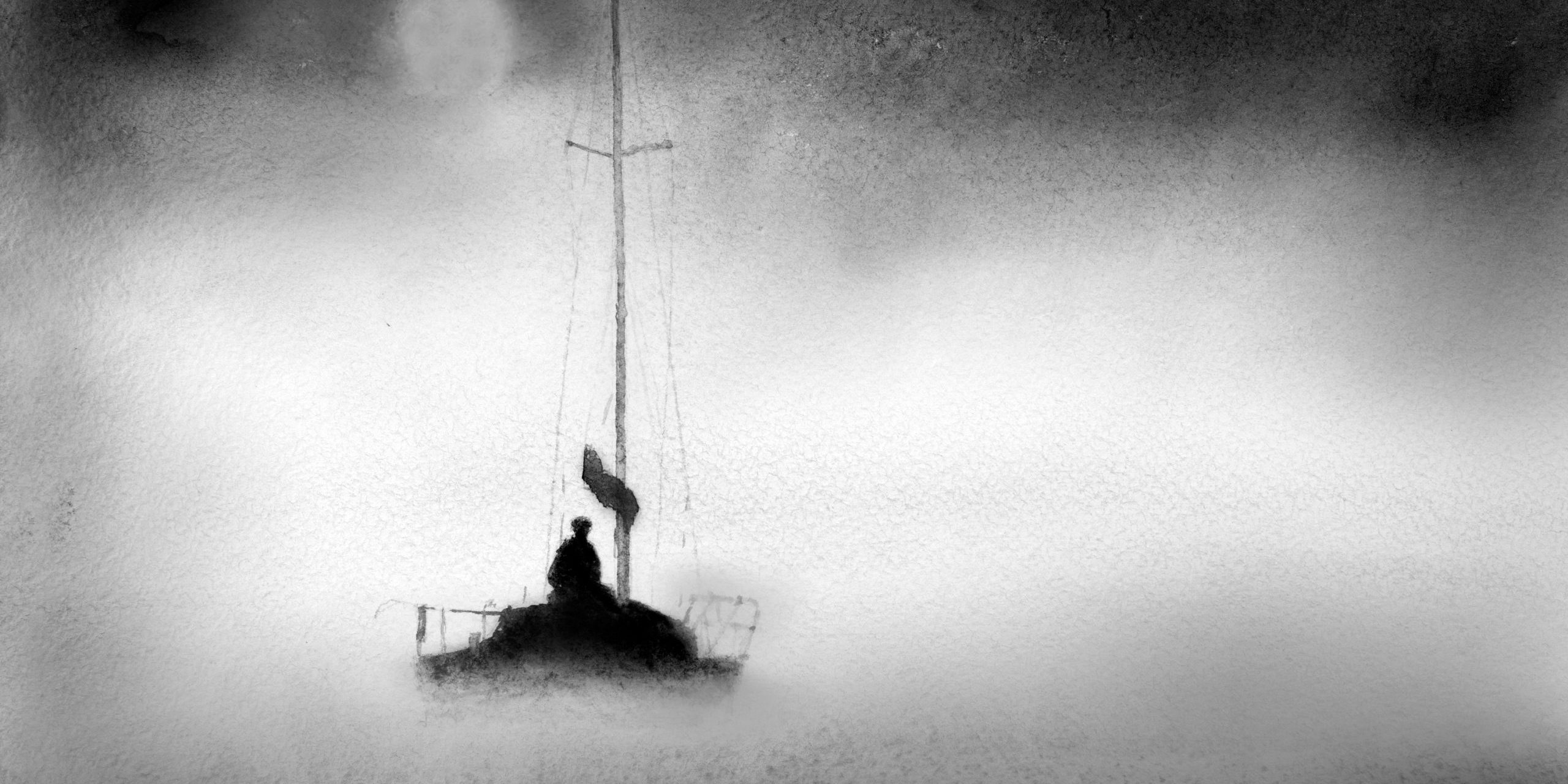
Long before modern navigation made the sea more predictable, sailors watched for signs in everything around them. An ordinary sound could become an omen. A bird circling overhead might carry the soul of someone lost at sea. A piece of fruit packed among the provisions could be blamed for an entire voyage gone wrong. And when the shoreline disappeared into fog or darkness, every unexplained movement aboard seemed to suggest that the crew might not be entirely alone.
In the spirit of the spooky season, we have gathered seven of the sea’s most enduring superstitions: tales of restless winds, unlucky cargo, watchful spirits, and rituals meant to keep misfortune at bay. Some belong to another era. Others still quietly follow vessels out of the harbor.
Never Whistle on Deck
The warning: A careless whistle could call up a storm.
To whistle aboard was to risk provoking the weather itself. Sailors once spoke of “whistling up the wind,” a phrase that captured both the promise and the danger of summoning forces beyond human control. When a vessel depended entirely on the wind for progress, a stronger breeze could be welcome. Too much of it could become something else entirely.
The prohibition was not absolute. In some traditions, sailors whistled deliberately when becalmed, hoping to coax enough wind into the sails to continue the voyage. The offense lay in doing so thoughtlessly or challenging conditions that were already building.
There was also a practical reason captains may have discouraged it. Whistling could interfere with commands and signals aboard a working vessel. Yet the more evocative explanation endured: the wind might hear, answer, and arrive with far more force than requested.
Leave the Bananas Ashore
The warning: Bananas aboard invite an unlucky voyage.
Few boating superstitions inspire such immediate reactions. Bring bananas aboard and someone may ask, with varying degrees of humor and sincerity, that they be removed before departure.
The precise origin is difficult to prove, which may explain why so many theories have gathered around it. Ships carrying bananas moved quickly because the fruit spoiled rapidly, possibly leaving less time to fish along the way and creating an association between bananas and an empty catch. Bunches could also conceal spiders and other unwelcome stowaways. As the fruit ripened, it released ethylene, hastening the spoilage of nearby produce in enclosed cargo holds.
Over time, practical frustrations became something darker. If a vessel carrying bananas met with misfortune, the cargo offered an easy culprit. The association outlived wooden ships, primitive storage, and slow passages. Today, bananas may be among the safest things aboard, but not everyone is willing to test the theory.
A New Name Must Be Earned
The warning: Rename a vessel carelessly and misfortune may follow.
A boat’s name is more than lettering across the stern. It becomes part of her identity, repeated over the radio, entered into records, and remembered through every passage. Maritime tradition holds that the sea remembers it too.
According to superstition, simply painting over an old name and applying another risks angering the gods of the sea. The former name must first be removed from the vessel and every onboard object, document, key ring, and life ring. Some renaming ceremonies call for the old name to be written on a metal tag and released into the water. Only after that identity has been symbolically erased may the new name be introduced and celebrated, often with an offering poured overboard.
The ritual may sound theatrical, but it reflects something quite human. Renaming marks a transfer of stewardship. Ceremony creates a deliberate threshold between the vessel’s former life and the journeys still ahead.
Do Not Begin a Voyage on Friday
The warning: Some days are better left to the harbor.
For generations of sailors, Friday carried an uneasy reputation. A vessel departing that day was thought to begin its voyage beneath an unlucky sign, and some captains preferred to remain in harbor rather than challenge the warning.
The reason has become less important than the ritual itself. As the belief traveled from port to port, Friday became one more condition to consider alongside tides, wind, and weather. A delayed departure cost little. Ignoring generations of sailors who had passed along the same warning could feel like tempting something better left undisturbed.
One popular tale claims the British Royal Navy tried to disprove the Friday superstition by launching a ship called HMS Friday on a Friday, placing her under a Captain Friday, and watching her vanish. It is a wonderfully ominous story, particularly in October. It is also widely regarded as folklore rather than documented naval history.
Step Aboard With the Right Foot
The warning: The first step can set the course for everything that follows.
Boarding with the left foot first was long considered an inauspicious start to a voyage. The belief belongs to a much broader history in which the right side represented good fortune, correctness, or protection, while the left carried less favorable associations.
A first step may seem too small to hold any consequence, but that is precisely what gives the ritual its appeal. Before a long passage, sailors could inspect the rigging, study the sky, and provision the vessel, yet the sea always retained the final word. Beginning on the right foot created one last moment of intention before surrendering to what could not be controlled.
Similar customs governed the order in which people came aboard and the objects they carried with them. Every arrival had the potential to influence the character of the voyage. On a vessel, where confined quarters magnify both cooperation and conflict, perhaps that instinct was not entirely unreasonable.
Never Harm an Albatross
The warning: A seabird may carry more than its own soul.
Few maritime symbols possess the haunting power of the albatross. Capable of traveling extraordinary distances over open ocean, the bird could appear beside a vessel far beyond any visible land. To sailors, its arrival felt almost supernatural.
Albatrosses and other seabirds came to be regarded as bearers of the souls of sailors lost at sea. Their presence could signal protection, favorable winds, or the nearness of unseen companions. To kill one was therefore not merely cruel. It risked harming the dead and turning whatever watched over the vessel against its crew.
Samuel Taylor Coleridge gave the belief its most enduring literary form in The Rime of the Ancient Mariner. After the mariner kills an albatross, the crew hangs the bird around his neck and the voyage descends into punishment. The poem did not create the bird’s maritime significance, but it ensured the warning would survive far beyond the age of sail.
The Figurehead Watches the Way
The warning: A vessel should not enter unknown waters without a watchful presence at her bow.
For centuries, carved figures adorned the bows of ships, ranging from animals and mythological beings to monarchs and protective deities. They communicated identity and power, but their purpose was not purely decorative.
In many seafaring traditions, the figurehead served as a guardian. Its eyes looked forward when the crew could not see what waited beyond the horizon or beneath the surface. Some were believed to calm the sea, frighten enemies, or guide the vessel safely home. Others honored a person, patron, or spirit whose favor the ship hoped to carry.
The placement mattered. Fixed at the point where the hull first met the water, the figure stood between the vessel and whatever approached. In fog, darkness, or unfamiliar waters, sailors could imagine that someone, or something, remained on watch.
Between Reason and Ritual
Why the Old Warnings Still Follow Us
Modern vessels can read the weather, locate hazards, communicate across oceans, and navigate through darkness with a precision earlier sailors could scarcely imagine. Technology has made the water more legible, but it has not silenced every creak in the hull, explained every shape beyond the rail, or made the horizon feel less mysterious after nightfall.
That remaining uncertainty is where superstition survives. The rituals connect today’s boaters with generations who faced the same horizon using far fewer instruments, and whose stories still seem to surface whenever the fog settles in. They also recognize a truth that experience on the water makes difficult to forget: preparation matters, but control is never absolute.
So the bananas may remain on shore. A new name may still be introduced with ceremony. And if someone begins to whistle as the sky darkens, even the least superstitious person aboard may ask them to stop. After all, the oldest sea stories tend to begin with someone who ignored the warning.
Every Vessel Begins a New Story
Whether considering an acquisition, preparing to sell, or exploring the charter market, our yachting advisors provide specialized guidance supported by an international network.
Explore Yachts for Sale Connect With an Advisor