Yachting | History & Tradition
How lantern-lit boats, floating Christmas trees, and carols carried across the water became enduring holiday traditions.
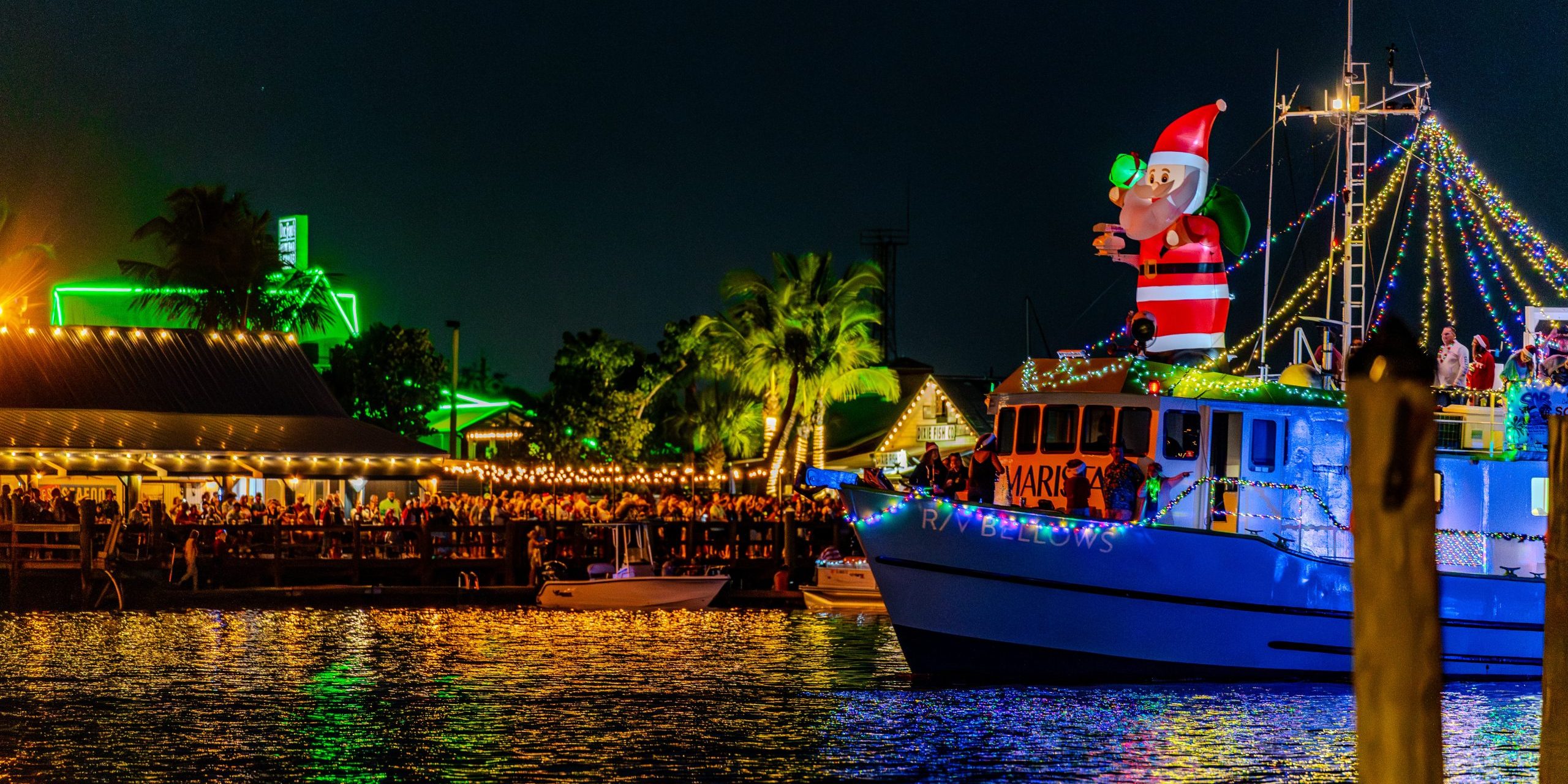
From shore, the first sign is a line of lights moving across the dark. Then the shapes come into focus: a sailboat outlined from mast to deck, a motorboat carrying a glowing holiday scene, a procession reflected in the water beneath it.
Holiday boat parades bring a familiar celebration into an unexpected setting. Their histories are just as engaging as the spectacle, with beginnings that include a summer outing, a civic concert, and a single decorated sailboat. Across four waterfront communities, those small ideas became a reason to gather year after year.
A Christmas Tradition That Began in July
Newport Beach’s holiday parade traces its roots to the Fourth of July. On July 4, 1908, gondolier John Scarpa led eight canoes through Newport Harbor behind his lantern-decorated gondola. The nine-boat procession grew out of an illuminated outing he had arranged the previous year.
The celebration developed into the summer Tournament of Lights. After Joseph Beek helped revive it in 1919, children contributed homemade floats, some assembled in his garage and inspired by Pasadena’s Tournament of Roses Parade. The harbor became a place to put their imaginations on display.
The Christmas connection emerged in 1946, when city employees towed a barge carrying a lighted Christmas tree around the harbor while passengers sang carols. As the summer event faded, the holiday outing gained followers. The Beek family supplied a ferryboat, more decorated vessels joined in, and a new seasonal tradition took shape.
A South Florida Stage for the Season
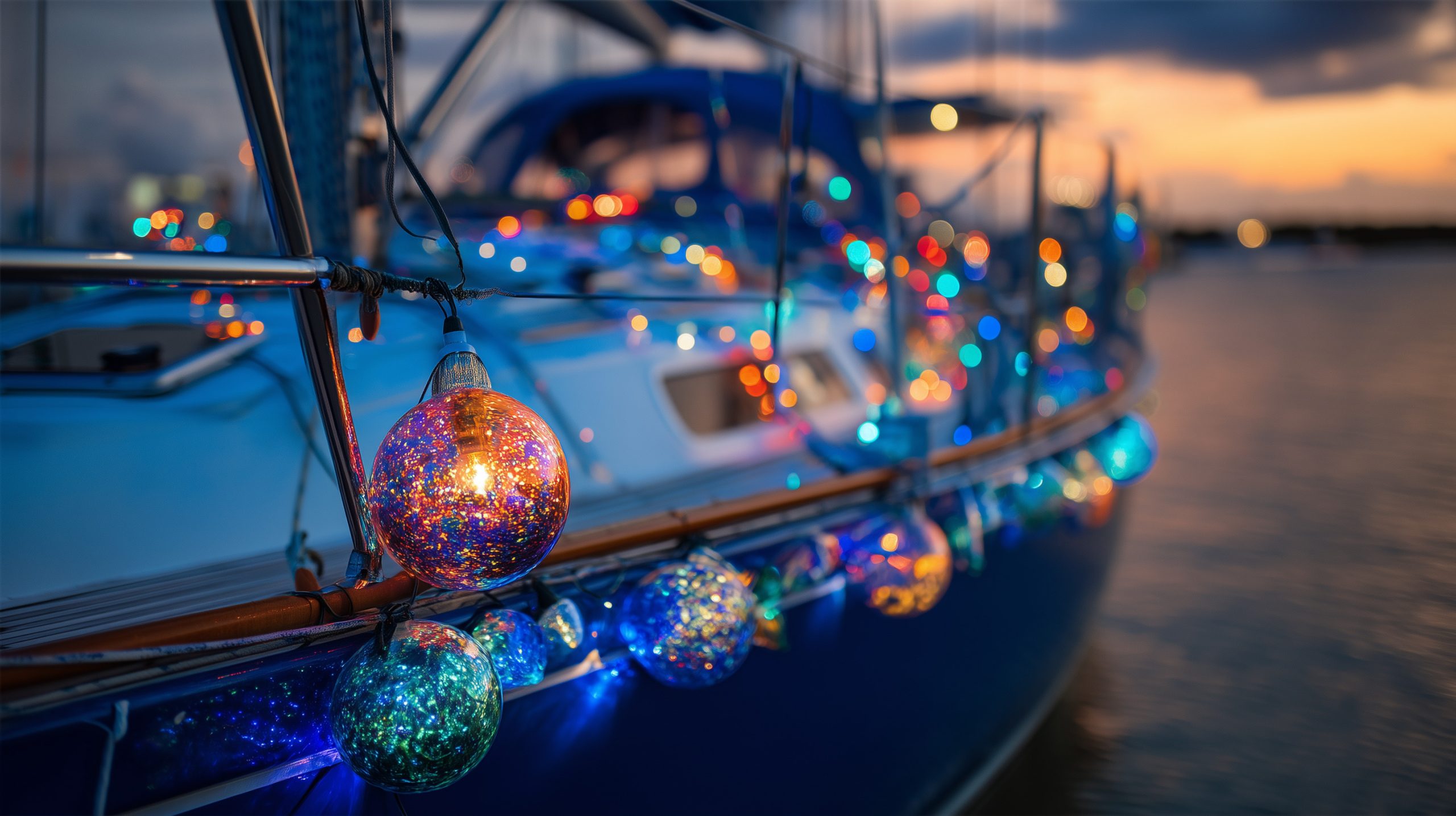
Fort Lauderdale has built its own holiday tradition around the waterways that help define the city. The celebration now known as the Seminole Hard Rock Winterfest Boat Parade took shape as an organized event in 1971, bringing a distinctly South Florida setting to the season.
Its evolution added new ways to participate. In 1983, the parade introduced its first official theme, “A Tropical Fantasy,” with boats using animation and props to interpret it. The decorations became a moving performance, giving each entry a story to tell as it passed the shoreline.
Today, the 12-mile route follows the New River and Intracoastal Waterway from Fort Lauderdale to Pompano Beach. Private boats and elaborate showboats travel through a waterfront transformed by lights, music, and people gathered to watch. The waterways become the stage for a celebration shared across the community.
When the Concert Came to the Shore
In Seattle, the tradition took shape around music. The Seattle Civic Christmas Ship Festival began in 1949, organized through the city’s parks department. A Christmas Ship traveled to waterfront parks with choirs aboard, performing for people gathered on land.
Early sailings lasted four to five hours and called at several locations each night. It was a traveling concert with an unusual stage, bringing the performance to neighborhoods along the water.
Argosy Cruises became involved in 1984, and the celebration eventually expanded from a handful of days to several weeks. Today, the Christmas Ship Festival continues that ship-to-shore exchange. Choir performances are shared with passengers, nearby boats, and audiences waiting at waterfront stops.
For a spectator on shore, the arrival is part of the experience. A lighted vessel draws closer, the music carries across the water, and a stretch of waterfront becomes a gathering place.
One Sailboat, a Growing Fleet
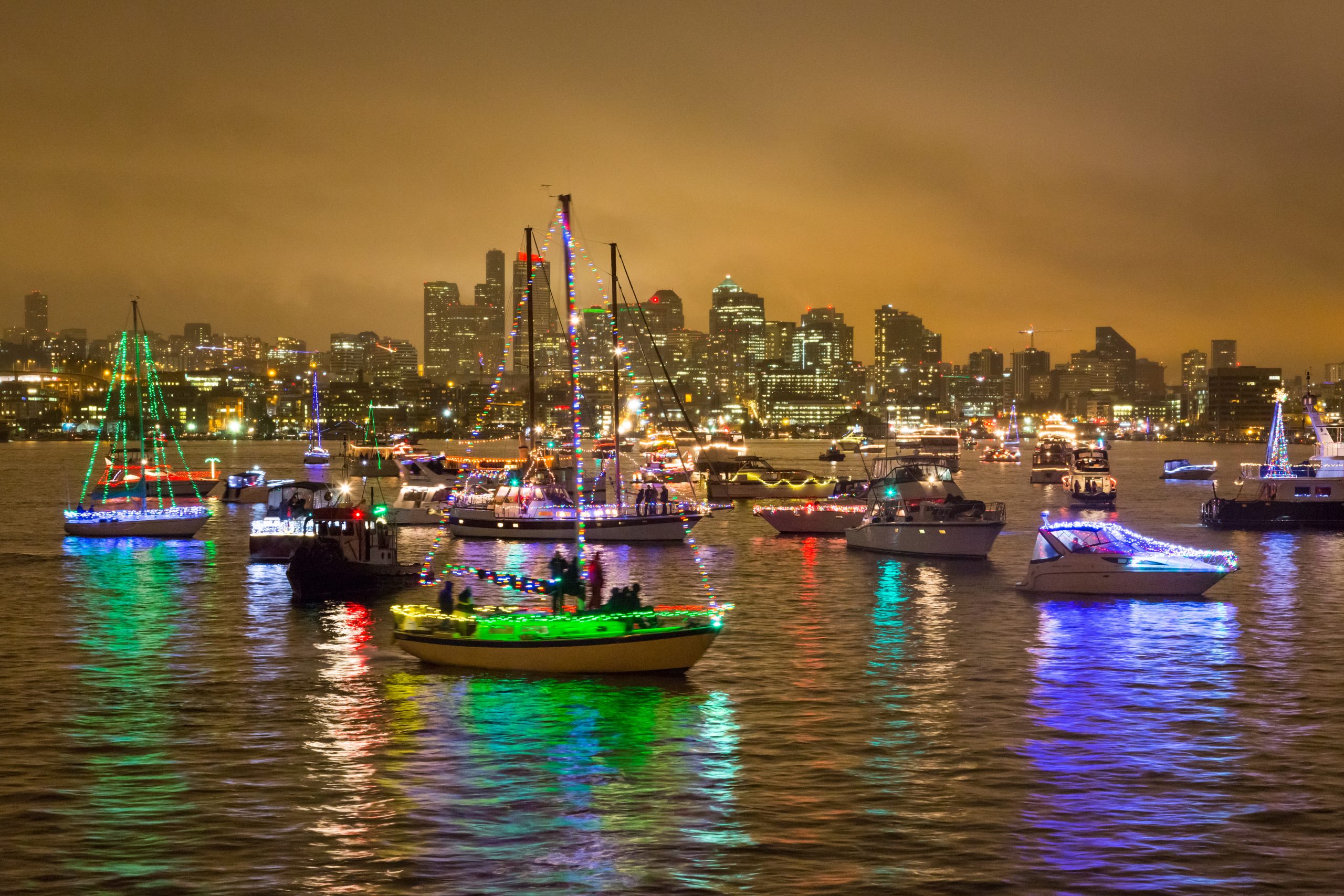
Portland’s Christmas Ships Parade began in 1954 with one decorated sailboat. Today, the tradition brings illuminated motorboats and sailboats to the Columbia and Willamette Rivers, supported by an entirely volunteer organization.
The people aboard create their own displays, often building them themselves, and cover their own expenses. Some participants have returned for more than 40 years. That continuity gives the parade a personal quality: familiar boats return, new designs appear, and each season adds to a shared local ritual.
The fleet also shows how much can be done with boats of different sizes. Organizers describe participating vessels ranging from 14 to 65 feet. A smaller boat with an inventive display has its own place in the procession.
Watching from public shoreline locations is free. The celebration extends well beyond the boats themselves, reaching the families and neighbors who make an evening of seeing them pass.
A Place Along the Waterfront
The Shore Is Part of the Story
A holiday boat parade gives both sides of the water something to look forward to. Boat owners spend time preparing a display; people ashore choose a viewing spot and watch for the first lights. A familiar harbor or river becomes somewhere to mark the season together.
Knowing the history adds something to that evening. Behind the elaborate lights are ideas simple enough to imagine starting yourself: decorate a boat, bring along some music, invite others to follow. More than a century after a gondola led eight canoes through Newport Harbor, the pleasure of watching a waterfront come together is still easy to recognize.